Sprint Times And Bar Speed
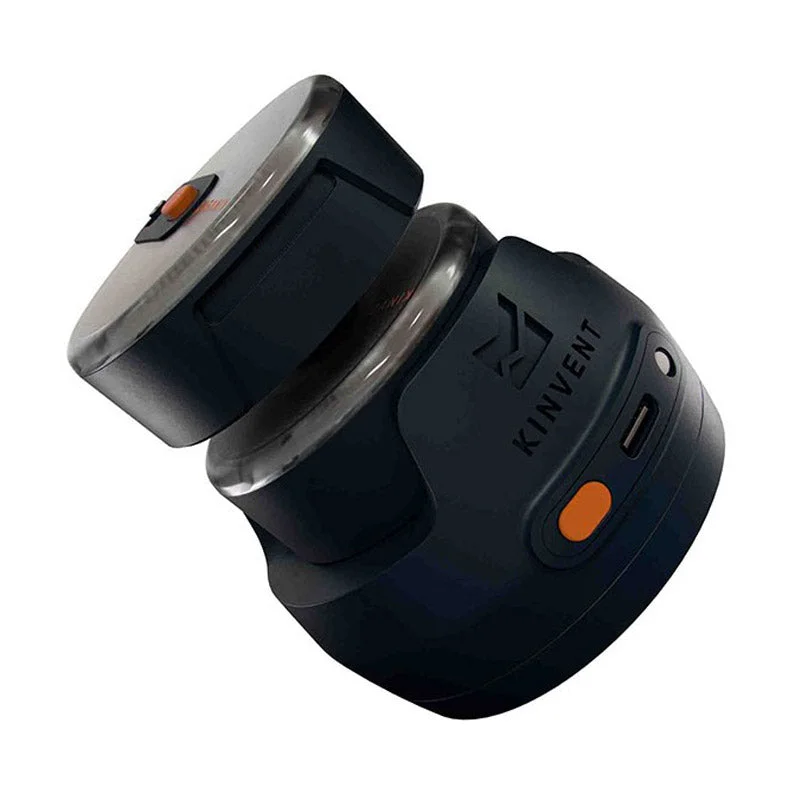
Kinvent K-Power Velocity Training Sensor
K-Power is a motion sensor that pairs an inertial measurement unit with ultra-wideband radio, and it records distance, speed and power. Kinvent give it two modes. Sprint Mode returns top speed, average and peak power, and split times at 10, 20 and 30 meters. VBT Mode returns average bar speed for each repetition, average and peak power, and the range of motion of the lift.
800 Hz is the capture rate Kinvent publish for this sensor. The unit is wireless, runs indoors and outdoors, and is listed at 2.2 lbs. Feedback comes back in two channels at once, color-coded and audio-coded, so an athlete reads a repetition without leaving the bar. A tripod stand accessory ships with the K-Power unit. The readers here are strength and conditioning staff, sports medicine teams and researchers.
Capture rate800 HzKinvent’s published figureSplit times10/20/30 m10 to 40 yardsWeight2.2 lbsUnit as listedDimensions11.81 × 3.93 × 7.87Inches, as listedSprint ModeVBT ModeIMU and UWBK-Force app
Inside The Sensor
Two sensing technologies, one capture rate
Kinvent publish four things about how this unit works: what senses the movement, how fast it samples, what each mode reports, and how the result reaches the athlete. Those are the figures to read before it goes into a session plan.
?IMU with ultra-widebandAn inertial measurement unit reads the motion of the sensor itself. Ultra-wideband radio handles position. Kinvent put both in one wireless housing and run it in a gym or on grass.IMU + UWB⏱️800 Hz capture800 Hz is the figure Kinvent give for data capture. Sampling at that rate is what leaves a short acceleration phase and a single bar path with enough points to read.800 Hz?Sprint Mode outputsTop speed, average and peak power, and splits at 10, 20 and 30 meters. Kinvent state the split distances require no setup, and the force-velocity profile is calculated in the app from the same run.10/20/30 m?Color and audio feedbackEvery repetition returns feedback on two channels together, one color-coded and one audio-coded. An athlete mid-set hears the outcome as well as sees it.Dual feedback
What You Get Back
The numbers K-Power puts on a screen
Two modes, one sensor, and a short list of outputs in each. Everything below is a value Kinvent list for the device.
?Top speed the moment a run endsSprint Mode?Force-velocity profile in the appNo spreadsheet⚡Average and peak powerBoth modes?️Bar speed on every repetitionVBT Mode?Range of motion per liftDepth?️Indoor and outdoor useUWB?2.2 lbs and fully wirelessPortable?Tripod stand in the boxIncluded
Mode By Mode
One sensor, two jobs
Sprint
Splits at 10, 20 and 30 meters
Sprint Mode reports top speed for the run, with average and peak power alongside it. Kinvent state the split distances need no setup, which is what lets a timed run drop into a session that was built around something else. The same run feeds the force-velocity profile the app calculates.
- Top speed reported per run
- Splits at 10, 20 and 30 meters, or 10 to 40 yards
- Average and peak power for the effort
- Force-velocity profile calculated in the app
Sprint ModeNo setupVelocity based training
Bar speed, power and depth
VBT Mode reports the average speed of the bar for each repetition, which is the figure a coach reads to set load and to see how hard a lifter is driving. Average and peak power arrive with it, and range of motion records how far the lift travelled. The color and audio feedback lands while the set is still running.
- Average bar speed per repetition
- Average and peak power for the lift
- Range of motion recorded on each repetition
- Color-coded and audio-coded feedback in the set
VBT ModeDual feedback
Motion And EMG
Where K-Power sits in the range
Three Kinvent sensors work outside the force family. K-Power follows a body or a bar through space, K-Move measures the angle a joint reaches, and the K-Myo pair reads muscle activation at the skin.
You’re HereK-PowerMotion sensor combining IMU and UWB.IMU + UWBMotionK-Force appCurrently viewingK-MoveConnected goniometer for joint range of motion.Range of motionGoniometerK-Force appShop the K-MoveK-Myo Duo PackSurface EMG sensors for muscle activation.Surface EMGTwo sensorsK-Force appShop the K-Myo Duo Pack
Questions
Frequently Asked Questions
Distance, speed and power. Kinvent split those outputs across two modes: Sprint Mode for running work and VBT Mode for barbell work.An inertial measurement unit and ultra-wideband radio, in one wireless unit. Kinvent describe the combination as a hybrid sprint and velocity based training sensor.800 Hz is the capture figure Kinvent publish for this device. It is the only rate they state, and we do not carry it across to any other sensor in the range.10, 20 and 30 meters, which Kinvent also express as 10 to 40 yards. They state that these splits need no setup before a run.Yes. Kinvent list indoor and outdoor use for K-Power, and the ultra-wideband side of the sensor is what they credit for tracking outside a fixed installation.Kinvent publish no accuracy or drift figure for K-Power, only the 800 Hz capture rate. Their own copy calls the tracking ultra-precise without attaching a number, so we leave thatoff the page and give you the rate instead.Yes. Kinvent state the profile appears in the app from the run itself, with no export step and no separate calculation.Two kinds together: color-coded and audio-coded. Kinvent call this dual feedback, and it is what lets a lifter work from the result of the last repetition.Yes, a tripod stand accessory is included with the K-Power unit. A replacement is sold on its own as the K-Power Tripod.Kinvent list 11.81 in × 3.93 in × 7.87 in and 2.2 lbs. That figure covers the unit as supplied.It is the name Kinvent give to the analysis layer they mention in their K-Power material. They publish no specification for it, we give you the name and leave it there, since describing behaviour we cannot check would be guesswork.The K-Force app, the same application every Kinvent sensor pairs with. Kinvent build the range as one solution, one app and connected sensors, so a K-Power run and a reading from another sensor sit under the same profile.